Energy Efficiency: What It Is and How to Improve It
Learn what energy efficiency means, why it matters, and how to reduce energy waste, lower electricity bills, and improve efficiency at home and work.
Energy Efficiency: What, Why, and How
Energy is essential to life; we use it to light, cookok oumealse l, appliancesmatravelweand manufacture technologyalbut ways meann'tt we use ener a wise mannerwiselyency lets us achieve the same outcomes while using less energy; it can reduce household electricity bills, lower business operating costs, and help limit the environmental impact of energy use.
It makes sense for anyone—homeowners, students, business owners, or anyone interested in sustainable living—to start by understanding energy efficiency so they can make better energy choices.
What Is Energy Efficiency?
Energy efficiency means using less energy to do the same task or provide the same service without compromising the desired result.
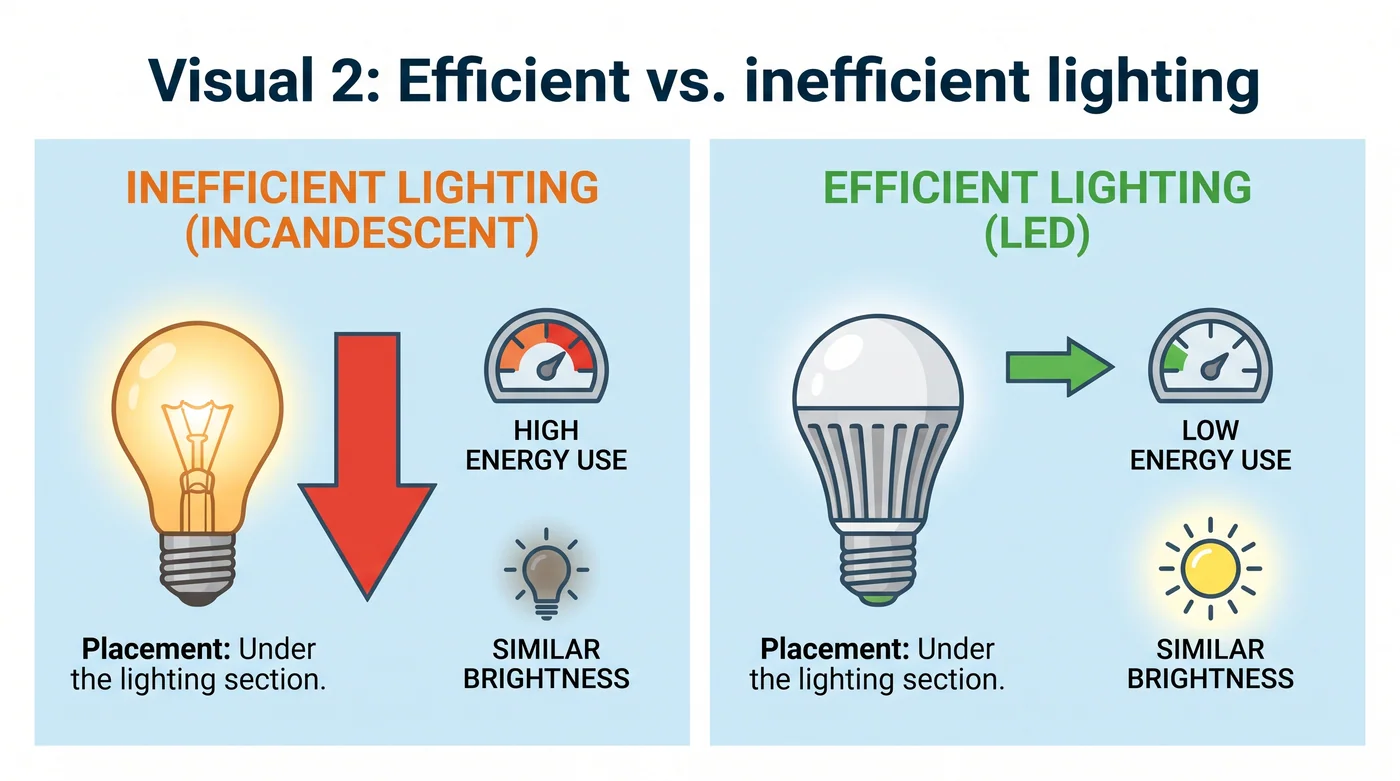
For instance, an LED bulb can match the brightness of an incandescent bulb while using far less electricity. Although both types of bulbs light up a room, the LED uses less energy.
Energy efficiency can apply to almost any activity that uses energy, including:
Providing light for homes, offices, and public spaces.
Using air conditioners to cool buildinggs.
Refrigerating and storing food.
Operating industrial machinery.
Transporting people and goods from one place to another.
Heating water and preparing meals.
The main idea is simple: keep up a useful level of performance while reducing unnecessary energy consumption.
It doesn't always mean that less energy should be used in all cases; rather, it means that more useful work, comfort, or output is obtained from the energy that is used.
A simple example of energy efficiency
Picture two fans that give the same airflow in a room.
Fan A has a power consumption of 75 watts.
Fan B uses 45 watts.
If both fans provide the same airflow under the same conditions, Fan B does so while using less electricity.
The difference amounts to 30 watts; Fan B therefore uses 0.24 kilowatt-hours less electricity each day if each fan runs for eight hours a day.
Over 30 days, the electricity saved is 7.2 kWh.
This shows that by choosing efficient equipment, people can lower energy consumption without stopping the service they need.
Energy Efficiency vs. Energy Conservation
Energy efficiency and energy conservation are closely connected, but they are not the same.
A more energy-efficient technology or system provides a given service while using less energy. In contrast, energy conservation reduces energy use by changing behavior or avoiding unnecessary activities.
Energy efficiency | Energy conservation |
Replace an old bulb with an efficient LED | Switch off lights when leaving a room |
Use an efficient air conditioner | Set the air conditioner to a reasonable temperature |
Improve building insulation | Close doors and windows while cooling a room |
Buy a vehicle that uses less fuel per kilometre | Walk, cycle, or share a ride when practical |
The two methods can be used together.
For instance, reducing electricity consumption is more effective when you use an efficient air conditioner and switch it off when a room is empty than when you rely on either action alone.
What is the importance of energy efficiency?
Energy efficiency matters because it can boost economic performance, reduce energy waste, and help establish a more sustainable energy system.
1. It reduces electricity and fuel costs
When compared under the same conditions, energy-effiuseppliances andn less energy to operate.
A refrigerator which uses less electricity can reduce household bills over its useful life. An efficient motor can cut down on operating expenses in a factory. A fuel-efficient vehicle can reduce the cost of traveling a given distance.
Savings will vary depending on the equipment, how often it is used, local energy prices, and the cost of buying and maintaining it.
2. It helps reduce environmental impacts
Producing and using energy can lead to greenhouse gas emissions and other environmental pressures.
Reducing energy demand can lower emissions, especially when the saved energy would have come from fossil-fuel sources.
The environmental benefit depends on how electricity or fuel is produced; for example, saving electricity from a low-carbon source will have a different effect on emissions than saving electricity mainly generated from coal or gas.
Efficiency is therefore as important as cleaner energy generation in reducing environmental impacts.
3. It improves energy security
Energy supplies needed by countries and communities are essential for keeping homes, businesses, transport, and vital services running.
Reducing wasted energy can lower the amount of fuel or electricity needed to meet demand. As a result, energy infrastructure will face less stress, and exposure to fuel supply disruptions will decrease.
For any country that imports energy, increasing efficiency can also reduce its reliance on imported fuels.
4. It reduces pressure on electricity networks
Electricity use can rise sharply when many people use air conditioners, heaters, or other appliances at the same time.
More efficient buildings and appliances can help reduce peak demand. This could mean less need for extra generation capacity and easier management of electricity networks.
Efficiency doesn't eliminate the need for reliable power infrastructure, but it can help existing systems meet demand more effectively.
5. It supports businesses and productivity
Businesses use energy for lighting, cooling, machinery, refrigeration, computing, and manufacturing.
Lowering energy consumption per unit of output can reduce operating costs and enhance competitiveness. Depending on its design, efficient equipment may also produce less unwanted heat and require less energy-related maintenance.
For many businesses, energy efficiency involves more than just an environmental choice; it is also an operational improvement.
In what way is energy efficiency measured?
The way in which energy efficiency can be measured will depend on the service or piece of equipment in question.
A typical method is to compare the energy input with the useful output.
For a simplified system:
Efficiency = Useful energy output ÷ Energy input × 100%
A device has an efficiency of 80 percent when it takes in 100 units of energy and supplies 80 units as useful output.
The leftover energy isn't necessarily destroyed; it can instead become unwanted heat, sound, friction, or other forms of energy that don't help the device's intended purpose.
While this simple formula helps explain energy conversion systems, it is by no means the only way to measure efficiency.
A more practical figure for many appliances is their energy consumption when providing a particular service.
Equipment or system | Useful efficiency measure |
Refrigerator | Electricity used over time, such as kWh per year |
Air conditioner | Cooling output compared with electrical input, using an appropriate efficiency rating |
Vehicle | Fuel consumed per distance travelled |
Building | Energy used per floor area over a defined period |
Industrial machine | Energy consumed per unit of production |
Lower energy consumption is usually preferable when equipment delivers the same performance under similar conditions.
Understanding kilowatts and kilowatt-hours
A kilowatt (kW) measures power, that is, the rate at which energy is used.
A kilowatt-hour (kWh) measures energy, that is, the quantity used over time.
For example, if a 1 kW appliance runs for three hours, it uses 3 kWh of energy.
Keep this distinction in mind when calculating electricity costs, since you're usually charged for the energy used (measured in kilowatt-hours), plus any applicable charges and taxes.
How to Improve Energy Efficiency at Home
There are many ways to reduce energy waste in your home. Some improvements cost little to nothing out of pocket, while others require upgrading appliances or altering the building.
The best approach is to identify where you use energy and focus on measures that deliver substantial savings.
1. Replace inefficient lighting
Improving lighting is one of the simplest areas.
LED bulbs can do the same job as older incandescent bulbs but use far less electricity; they also tend to last longer, so you need to replace them less often.
To improve lighting efficiency:
Replace frequently used incandescent bulbs with appropriate LED bulbs.
When selecting brightness, consider lumens rather than relying only on watts.
Use task lighting when you don't need full-room lighting.
Whenever practical, use daylight.
Switch off lights in unoccupied areas.
A lower-wattage bulb isn't automatically better if it doesn't provide enough light; compare brightness and light quality with energy use.
2. Choose efficient appliances
Appliances can account for a major portion of household electricity use, especially when they run for long periods.
If you are buying a refrigerator, washing machine, air conditioner, or other large appliance, compare its energy consumption and efficiency rating.
Useful considerations include:
Estimated annual electricity consumption.
The capacity suitable for your household.
Under realistic operating conditions.
The purchase price and anticipated service life.
Repairability and maintenance requirements.
Although an efficient appliance may cost more upfront, its lower operating costs can make it a better long-term choice.
There is no reason to replace a working appliance simply because a newer model is on the market. Consider energy savings, replacement costs, and the environmental impacts of both manufacturing and disposing of the equipment.
3. Improve air conditioning efficiency
In hot climates, cooling can account for a large amount of electricity use.
Air-conditioning efficiency depends on the equipment type, room conditions, installation quality, maintenance, and how the system is operated.
Practical improvements include:
Follow the instructions provided by the manufacturer for cleaning or replacing the filters.
Make sure that the outdoor units are not blocked.
Where suitable, seal any unwanted air leaks.
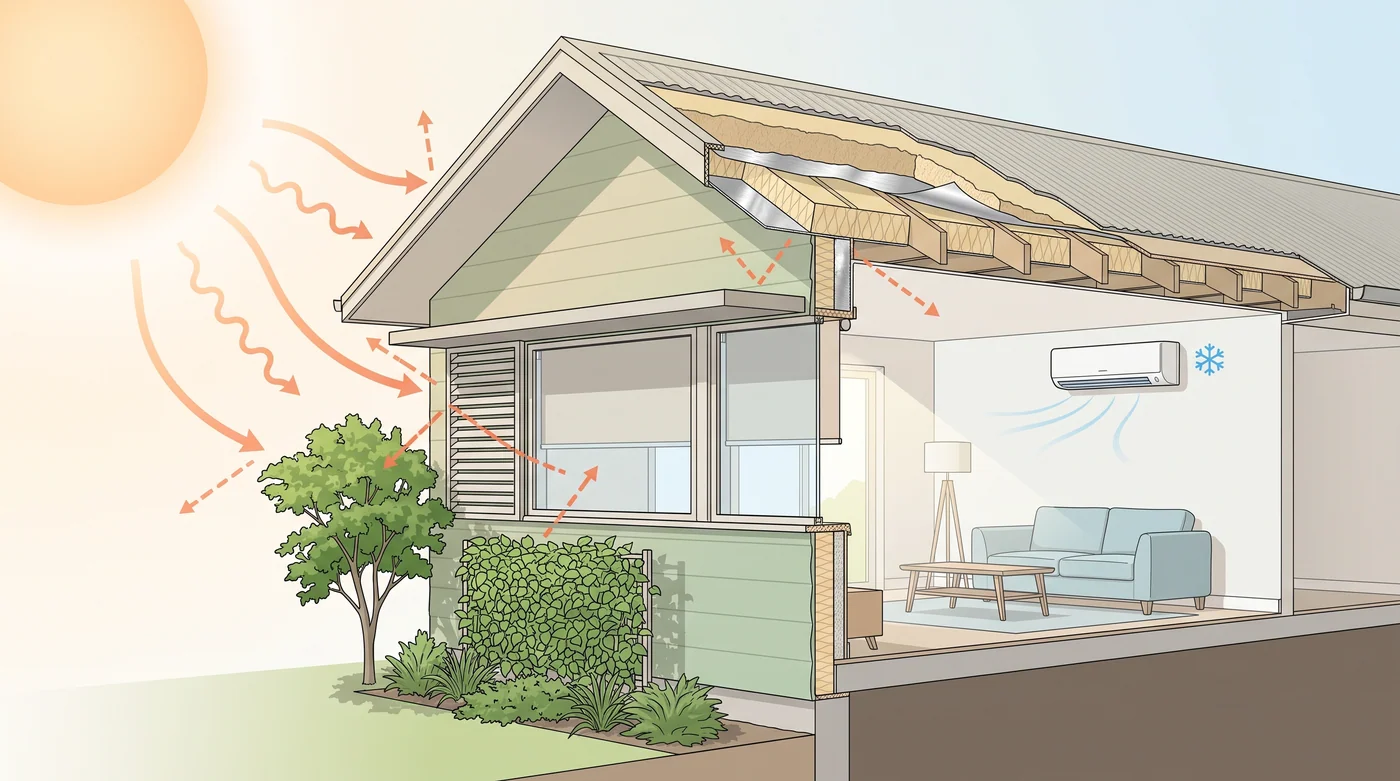
Use curtains or blinds to reduce direct solar heat.
Comfortably set the temperature without overcooling.
When cooling a room, close both the doors and the windows.
Choose a unit that is the right size for the space.
In hot, humid climates, also ventilate and manage humidity. Reducing airflow without considering indoor air quality can cause other problems.
4. Reduce heat entering the building
The less unwanted heat a building takes in, the less cooling it will need.
Roof shading, good insulation, reflective roofing materials, exterior shading, and well-designed windows all reduce heat transfer.
The right solution depends on the climate and the building's design. However, insulation is especially useful because it minimizes unwanted heat flow; it should still be chosen alongside ventilation and moisture control.
In a warm-climate house, it may be particularly advantageous to reduce direct sunlight entering through the windows and improve roof performance.
5. Use appliances efficiently
You can waste energy even when you use efficient equipment unnecessarily.
For example:
Wash full loads.
When doing laundry, use cold water.
Do not leave equipment on when it is not required.
Set your computers and displays to power-saving mode.
Make sure the refrigerator doors remain closed and that the appliance has sufficient ventilation around it.
Wherever possible, disconnect or switch off any equipment which uses standby power.
Standby power use varies; some appliances consume little energy while others use more, so focus on items that stay connected for long periods.
6. Monitor electricity consumption
Understanding your electricity use makes it easier to spot waste.
Review your electricity bills to compare use across months, accounting for weather changes, the number of people living in the house, and appliance use.
Where available, smart meters or plug-in energy monitors can show how much electricity particular devices use.
A list that records the main appliances and can also be used for opportunities
Energy Efficiency in Buildings and Businesses
Improving energy efficiency doesn't stop with individual households; commercial buildings, offices, hotels, factories, schools, and hospitals can all use systematic energy management.
Conduct an energy audit.
An energy audit examines how a building or business uses energy and identifies ways to improve it.
A basic audit may include:
Reviewing electricity and fuel bills.
Identifying major energy-consuming equipment.
Checking the operating schedules and controls.
Checking the lighting, cooling, ventilation, and insulation.
Calculating the costs and potential benefits of the improvements.
Focusing actions on cost, savings, and operational requirements.
A professional audit can use additional measurements, engineering calculations, and equipment inspections.
Improve industrial equipment
Industrial facilities can improve efficiency by optimizing their pumps, compressors, boilers, and production processes.
This includes keeping equipment in good condition, reducing leaks in compressed-air systems, matching motor capacity to actual demand, and improving process controls.
The best improvements vary by facility; a small modification in a continuously running system could yield considerable annual savings, whereas an expensive upgrade to infrequently used equipment would have a longer payback period.
Use energy management systems.
Energy management systems help organizations monitor and regulate their energy use.
They can combine data from meters, sensors, the building's control systems, schedules, and performance records to detect unusual consumption and improve operational decisions.
Monitoring alone doesn't guarantee cost savings; the information must lead to real improvements in how equipment is operated, maintained, or invested in.
Energy Efficiency in Transportation
Transportation efficiency refers to the amount of energy needed to move people or goods.
A vehicle is more energy-efficient when it can travel farther on the same amount of fuel.
Ways to improve transportation efficiency include:
Selecting vehicles with lower energy consumption for the intended use.
Keeping the tires at the recommended pressure.
Avoiding unnecessary vehicle weight.
Reducing excessive idling.
Drawing up routes in such a way as to avoid covering extra distance.
When using public transportation, walk or cycle if practical.
Improving freight logistics and vehicle use.
Electric vehicles can use energy more efficiently than conventional combustion vehicles at the vehicle level. Still, their total environmental impact also depends on how electricity is generated, vehicle manufacturing, and other factors.
How to Improve Energy Efficiency: A Step-by-Step Plan
You don't need to make all the upgrades at once. A sensible plan will help you prioritize the changes most likely to make a difference.
First, set a baseline by reviewing your energy bills and noting the main sources of consumption.
In step 2, look for avoidable waste, such as unnecessary operating hours, poor maintenance, inefficient lighting, or cooling losses.
In step 3, start with low-cost measures by adjusting schedules, keeping equipment in good condition, and improving daily energy habits.
In step 4, compare upgrade options and assess efficient appliances, building improvements, and equipment upgrades based on energy consumption, cost, and expected service life.
In step 5, calculate the payback by dividing the extra up-front cost by the expected annual financial savings to arrive at a simple payback period. This calculation doesn't account for financing, maintenance changes, or the time value of money.
In step 6, measure the results by comparing energy consumption before and after the changes, accounting for factors such as weather, equipment operating time, and the number of people present.
Carry out the process periodically. Energy efficiency is not a one-off purchase; it should be an ongoing effort.
Common Energy Efficiency Mistakes
Several misconceptions can lead to bad decisions.
Error 1: To suppose that all energy-saving products are efficient. Assess a product by its real performance and energy consumption, not just by marketing language.
Error 2: Concentrating solely on the purchase price. The cheapest appliance might cost more over its lifetime.
Error 3: Failing to maintain it. If filters are dirty, the equipment is poorly maintained, or settings are wrong, performance can decline.
Error 4: Confusing efficiency with total energy savings. An efficient appliance can still use a lot of energy if you use it more often or for longer.
Error 5: Carrying out upgrades without measuring the results. Assess savings based on actual consumption and similar operating conditions.
The Future of Energy Efficiency
Energy efficiency will remain important as homes, industrial facilities, and transportation systems become more electrified and connected.
More sophisticated building control systems, more efficient heat pumps, improved industrial processes, better energy monitoring, and smarter electrical networks can help cut energy waste.
Artificial intelligence and automation can also detect inefficient operating patterns and adjust equipment controls. But their advantages depend on proper implementation, reliable data, and systems that actually reduce energy use.
Energy efficiency cannot replace renewable energy or other measures to combat climate change; instead, it supports them by reducing the amount of energy needed from the start.
Frequently Asked Questions
How can energy efficiency be explained in simple terms?
Energy efficiency means achieving the same result with less energy. For instance, an LED bulb can provide about the same amount of light as an earlier type of bulb while using less electricity.
What may be given as an example of energy efficiency?
A refrigerator that maintains food at a constant temperature while using less electricity is one example; other examples are efficient air conditioners, LED lighting, well-insulated buildings, and fuel-efficient vehicles.
What is the importance of energy efficiency?
It can reduce costs, decrease waste, lower energy consumption, and improve energy security. What is the difference between energy efficiency and energy conservation?
Improving energy efficiency means a technology requires less energy to provide a service. Energy conservation reduces energy use by changing behavior or avoiding unnecessary activities. Both methods can reduce total energy consumption.
What can I do to make my home more energy efficient?
Start with efficient lighting, choose appropriate appliances, keep the air conditioner well maintained, reduce heat gain, and adopt sensible operating habits. Review your electricity consumption to identify which improvements make the biggest difference.
Does improving energy efficiency lead to lower electricity bills?
Yes, because improvements reduce electricity use, and if the electricity tariff stays about the same, the energy portion of the bill will usually go down. Savings vary with the equipment, how it is used, and the tariff structure.
Is it always worthwhile to buy energy-efficient appliances?
It is not automatic. Compare the extra purchase cost with the expected energy savings, service life, maintenance, and performance. The upgrade seems more appealing when the savings cover the cost.
Can improving energy efficiency contribute to the environment?
Certainly, reducing energy use can lessen the environmental effects of energy production, such as greenhouse gas emissions. The extent of the benefit will vary according to the type of energy source and the particular equipment or activity in question.
Conclusion
One way to use energy more responsibly is through improved energy efficiency; this allows homes to lower electricity consumption, enables companies to manage operating costs, and can reduce the environmental impact of energy use.
The most effective improvements start with understanding where energy goes; this can involve replacing inefficient lighting, improving cooling systems, keeping equipment in good condition, and assessing the building's performance, with small and large changes working together.
The aim goes beyond just using less energy; it is to obtain the services we need with less waste.
By making informed choices and measuring the results, individuals and organizations can improve energy efficiency over time.